Our Services
Brake Fluid Change in Vantaa
Fresh brake fluid is essential for safety
We measure brake fluid moisture free of charge during every service.
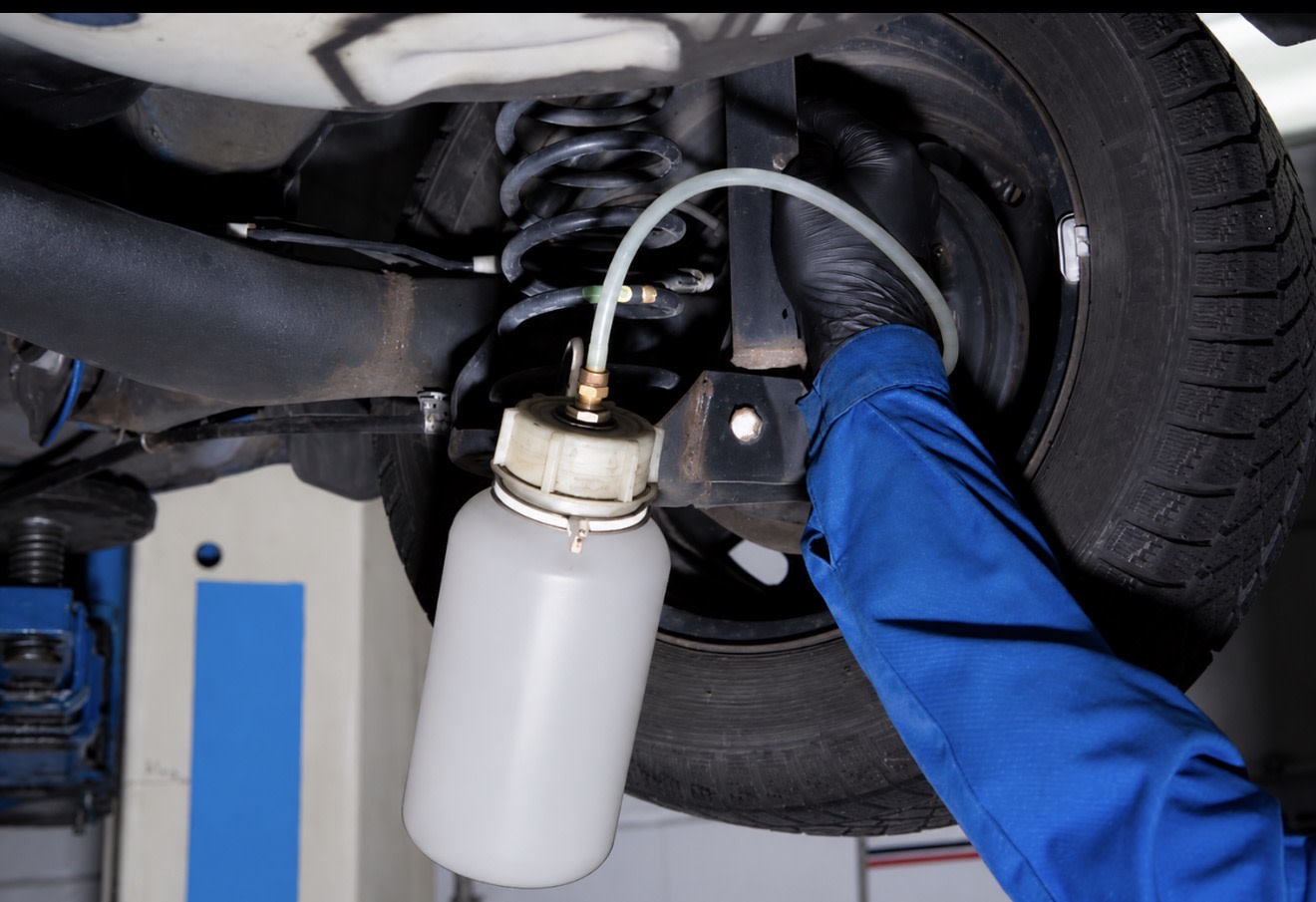
Brake fluid change pricing:
- Brake fluid change (DOT 4, standard) – 75 €
- DOT 5.1 fluid (sportier use) – 95 €
- Fluid moisture test – free with any service
- ABS circuit bleed via diagnostic tool – included
- Visual brake component check – included
Our Services
Brake fluid change
Price includes fluid, pressure-bleed equipment and flushing the ABS circuit where required.
from75 €
When brake fluid needs changing
Brake fluid is hygroscopic — it absorbs moisture from the air. Fresh fluid has a boiling point around 260 °C, but after two years the moisture content rises to 3–4 %, dropping the boiling point below 160 °C. Under hard braking — a long downhill, or behind a heavy vehicle — temperatures easily exceed this, the fluid boils, and the brake pedal sinks straight to the floor. Manufacturers recommend a fluid change every 1–2 years or every 30 000–40 000 km. Many cars' service schedules require it to preserve warranty. Moisture content can also be measured in seconds with an electronic tester — the check is always free with any service. Beyond moisture, the fluid collects metal particles from the calipers and master cylinder. Old fluid is brown or black, whereas fresh fluid is clear or slightly yellow.
Our Services
Why does the brake pedal feel spongy?
A spongy or occasionally bottoming pedal almost always signals air in the hydraulic circuit or fluid that has gone too old. Air can enter through an over-low reservoir level, or when a caliper has been opened without proper bleeding. Aged fluid saturated with moisture starts to vaporise under heavy use — the pedal feels normal for the first couple of stops but sinks to the floor on the third. Diagnosing the cause requires pressure-testing the circuit and checking the fluid's moisture content, which tells us whether a fluid change is enough or whether the master cylinder or hoses need replacing too.
Other services
Related repair services
Technically adjacent repairs and maintenance for the same vehicle system.
Brake Caliper Replacement
from 240 €
Replacing a faulty brake caliper. Ensures even braking and prevents brake seizure.
Brake Caliper Repair
from 240 €
Repairing a seized or leaking brake caliper. Ensures even and effective braking.
Brake Shoe Replacement
from 182 €
Replacing rear drum brake shoes. Restores effective braking and safety.
Brake Service
from 250 €
Comprehensive brake inspection and maintenance. Includes cleaning, adjustment, and test drive.
Brake Hose Replacement
from 160 €
Replacing a cracked or swollen brake hose. Ensures brake pressure is maintained safely.
ABS Unit Replacement
from 250 €
Replacing a faulty ABS unit or sensor. Restores the anti-lock braking system to full operation.
Our Services
Can't Find the Service You Need?
We handle all car repair work. Request a free cost estimate by phone or by booking an appointment online.
Popular Services